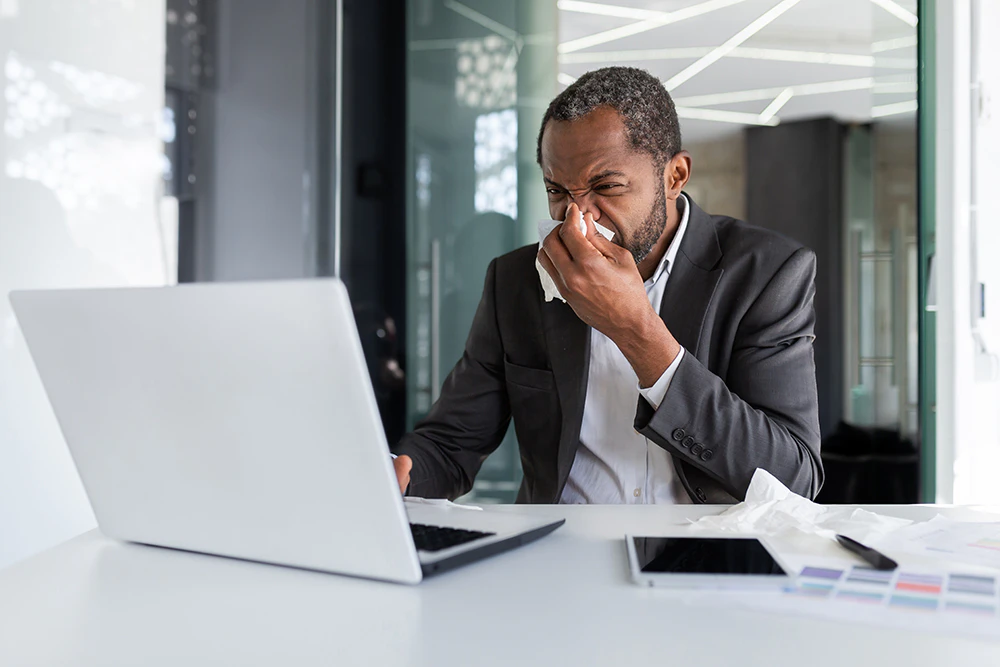
Invisible yet powerful, workplace allergens can silently undermine the health and vitality of your team, often slipping under the radar until their effects ripple through your business. Dust, mould spores, pollen, pet hair, and other microscopic troublemakers travel through HVAC systems, settle deep in carpets and upholstery, and can trigger a cascade of allergic reactions, breathing difficulties, and illness. This hidden invasion can lead to more frequent sick days, reduced morale, and ultimately, a decline in productivity and company success.
Daily janitorial cleaning routines, such as vacuuming and dusting, do not effectively reduce or eliminate allergens, and inefficient cleaning techniques can sometimes make the problem worse by spreading irritants instead of removing them.
Committing to high-level health and safety standards at your business means addressing workplace allergens directly, and this includes adding regularly scheduled professional deep cleaning for allergen control to your ongoing cleaning and maintenance routines.
UNDERSTANDING THE PROBLEM OF ALLERGENS IN THE WORKPLACE
People often refer to ‘sick building syndrome,’ when speaking of prevalent, non-specific illness in the workplace, but sometimes it is an overabundance of allergens within a facility that can cause widespread allergic symptoms. The accumulation of dust and other allergens within indoor work areas can result in illness and productivity decline due to allergy-related issues.
HOW ALLERGENS AFFECT EMPLOYEE HEALTH AND PRODUCTIVITY
Unlike seasonal outdoor allergies, workplace allergens persist throughout the year, impacting employees with symptoms such as eye irritation, headaches, congestion, sneezing, and even asthma attacks. These ongoing exposures can seriously affect both comfort and health in the workplace.
With employees spending a significant portion of their week at work, long-term exposure to allergens and poor air quality becomes a critical concern. This constant exposure can lead to respiratory illnesses, diminish mood and energy, and reduce cognitive clarity. As a result, allergies not only disrupt workflow but also lower employee engagement, ultimately decreasing performance and productivity.
DEEP CLEANING FOR ALLERGENS
Professional deep cleaning for allergens involves using specialized cleaning protocols designed to remove allergy-causing contaminants and improve indoor air quality. These methods can include ‘Capture and Removal’ cleaning systems that trap and eliminate dust and pollutants, preventing them from being released back into the air or simply moved from one location to another. Common deep cleaning solutions for allergen control in the workplace include:
- Regular cleaning and maintenance of HVAC vents and ducts, including frequent HEPA filter replacement
- Routine deep vacuuming (using HEPA filtration) of carpets and upholstery to remove fine dust particles
- Hot water extraction cleaning for carpets
- Use of microfibre cleaning cloths and flat mops for dust removal
- Focused mould and mildew preventative cleaning especially in high humidity areas such as bathrooms and breakrooms
- Use of environmentally sustainable cleaning products
HOW OFTEN TO SCHEDULE DEEP CLEANING FOR ALLERGEN CONTROL
The frequency of deep cleaning for allergens depends on the size of your facility and type of work conducted there. Some industries produce higher levels of allergy-triggering contaminants than others. Regardless of the sector, more frequent cleaning will have greater success in lowering allergen levels in any workspace over the long term.
Begin with a monthly schedule, and after monitoring the results, determine if more frequent deep cleaning is required. Or create a calendar to target different issues or areas at different times throughout the year. For example, spring deep cleaning may target different areas than in winter. Integrate deep cleaning for allergens as a critical part of your regular maintenance schedule.
Other optimal times to consider scheduling intensive deep cleaning include:
- Over flu season or during viral outbreaks
- Seasonal transitions (especially spring)
- Summer deep cleaning when operations may be less intensive
- Immediately following renovation or construction projects
- Before and after company events or parties
ONGOING ALLERGEN MANAGEMENT
- Maintain HVAC systems regularly and replace HEPA air filters often to trap airborne allergens
- Install air purifiers throughout your facility to filter airborne allergens and VOCs
- Maintain healthy humidity levels to prevent mould and mildew growth which are both common allergy triggers
- Educate employees on limiting their use of perfumes and scented body products that can cause allergic reactions for co-workers.
Partner with a trusted commercial cleaning service to provide professional deep cleaning for allergen control on a regular ongoing basis. Investing in professional deep cleaning services now to promote allergen control at your business, will foster a healthier and more productive workforce and result in cost-saving benefits for your company in the long term.
ServiceMaster Clean delivers exceptional commercial cleaning and maintenance solutions for businesses and commercial spaces across Canada. Their advanced equipment and industry expertise ensure clean and healthy workplace environments.